There is a moment on every used-car lot that decides how the next three years go, and it is not the test drive. It is the signature. Before it, the car’s problems belong to the seller. After it, they are yours.
That is the whole reason a pre-purchase inspection in Millbrook, AL exists. It is a different thing from the walk-around you did with your phone flashlight. A shop puts the vehicle on a lift, checks the fluids and the tires, plugs into the computer, and hands you a written list of what it found while you can still change your mind.
Here is what happens in our bay when somebody from Millbrook or Prattville brings in a car they are thinking about buying, and how to read what we find.
Why a Used Car Inspection in Alabama Matters More Than It Does in Other States
Some states catch bad used cars for you. Alabama does not, which changes what a used car inspection is worth here.
According to the Alabama Department of Revenue, Alabama law does not provide for emissions testing of motor vehicles, and emissions testing is not a prerequisite to registration. There is no periodic statewide safety inspection either. The only inspection the state asks for is a VIN check, and only when a vehicle previously registered in another state changes hands here.
From a buyer’s point of view that means nobody official is ever going to look at this car. Not before you buy it, not at registration, not at renewal. If a shop does not put it on a lift, no one will.
That leaves the paperwork, and paperwork has a blind spot. The Federal Trade Commission puts it plainly: a vehicle history report is no substitute for an independent inspection, because a report may list accidents and flood damage but typically will not list mechanical problems. A clean report tells you nobody filed anything. It will not tell you the transmission is slipping.
Dealers do have to put a Buyers Guide on every used car, and you are entitled to one when you buy online too. The Guide tells you whether the car carries a warranty or is being sold as is. That last phrase is exactly the one that should send you looking for a lift.
One more FTC point for anyone shopping certified pre-owned: a mechanical inspection is still a good idea when the car has been certified and inspected by the dealer and comes with a warranty or service contract. It is also a different animal from a safety inspection, which only looks at what makes a car unsafe to drive today.
What if the Seller Says No?
Ask early, and ask plainly: can I have this inspected by my own shop before I buy it? The FTC is blunt about what to do next, and we agree. If a dealer will not allow an independent inspection, go to another dealer. If the car cannot leave the lot for insurance reasons, look for a mobile inspection service, or ask the dealer to bring it to a facility you choose.
A seller with nothing to hide has no reason to refuse. One who refuses has told you something.
What We Look For on the Lift
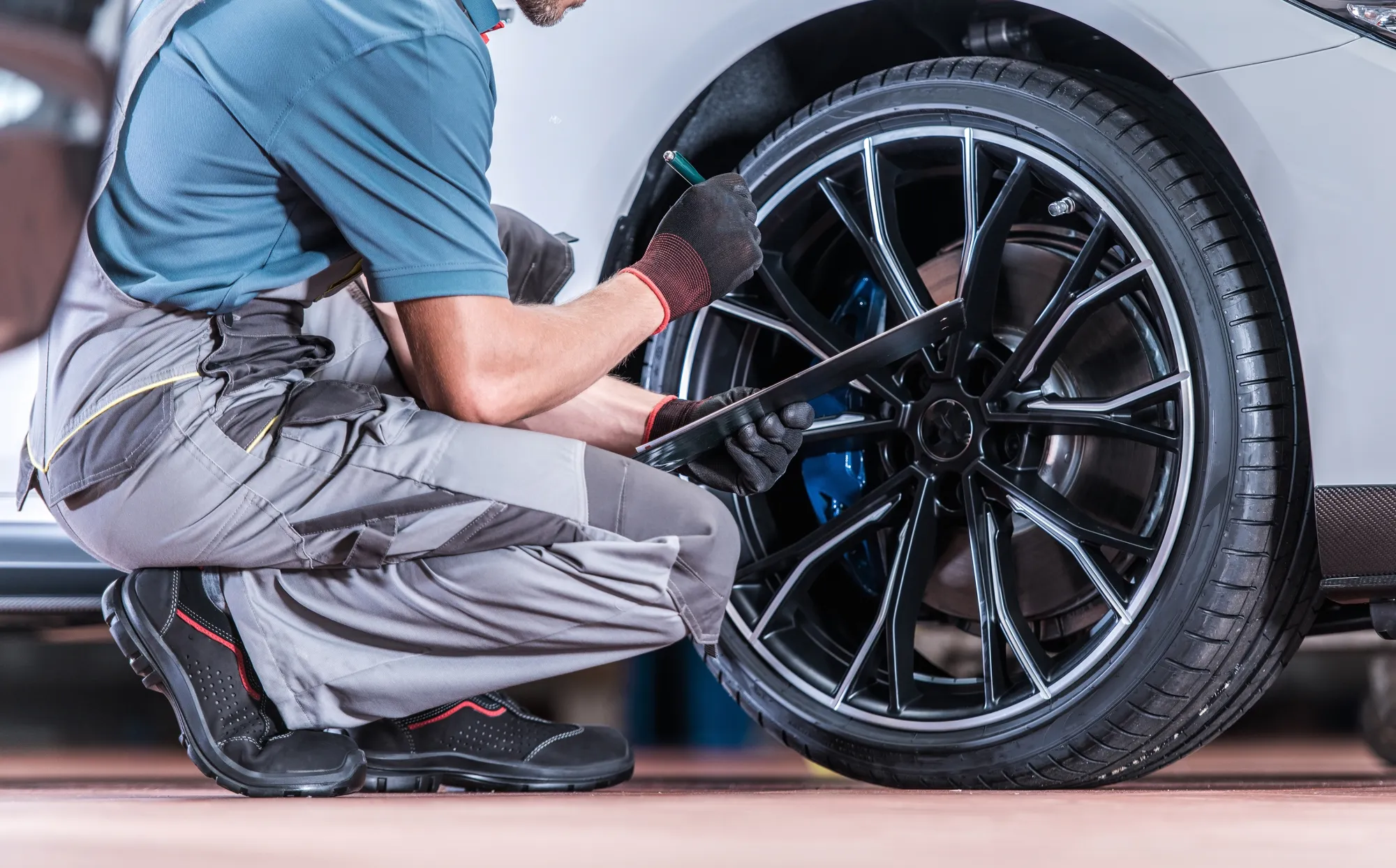
The lift is where a pre-purchase inspection earns its keep, because what matters most is invisible from standing height. This is the part of auto repair in Millbrook a buyer never gets to see on the lot.
Frame and unibody. We look at the structure itself: kinks and creases in frame rails, pinch welds that have been pulled or hammered, factory seam sealer that has been disturbed, and fasteners with the paint twisted off them. Bodywork that looks perfect in the sunlight often looks very different underneath. A car with straightened structure will fight its alignment forever, and it can behave unpredictably in the next collision.
Suspension and steering. With the wheels hanging, we can grab and pry where you cannot. Ball joints and tie rod ends get checked for play, control arm bushings for cracking, sway bar links for rattle, struts and shocks for weeping oil, and springs for corrosion. Torn boots on a CV axle or a ball joint are small now and expensive later. Once the grease is out and the Alabama grit is in, the clock starts.
Brake lines and fuel lines. This is the finding that turns a good-looking car into a walk-away. Steel brake lines run the length of the vehicle, and the ones near the rear axle take a beating. On a humid Gulf Coast trade-in, a line can look like harmless surface rust from three feet away, then show scaling and pitting once it is scraped. A pitted brake line is not a maintenance item. It is a failure waiting for the panic stop.
Exhaust, mounts and leaks. We follow the exhaust for rot and patch jobs, check the mounts for collapse, and trace any leak to its source rather than the puddle it made.
Brakes themselves. Pad thickness, rotor condition, caliper movement, and whether somebody laid new pads over ruined rotors to quiet the test drive. Take a thump or a shudder seriously: thumping noises when braking have a short list of usual causes, and most of them cost money.
Fluids Tell You How the Car Was Treated
An engine bay can be pressure-washed in twenty minutes. Fluids take longer to fake.
- Engine oil. Level, color, and what is on the dipstick. Milky or coffee-colored oil suggests coolant where it should not be, and a gritty film says the oil has been in there a long, hot time.
- Transmission fluid. Color and smell do the talking. Burnt-smelling fluid means the transmission has been cooked, and a fluid change does not reverse that.
- Coolant. Condition, level, and whether somebody has been topping it off with plain water. Coolant that looks like chocolate milk is a stop-and-think finding.
- Brake fluid. Dark, contaminated fluid on a car with a tidy-looking service history usually means the maintenance was cosmetic.
We see this every summer: a car parked on a lot through an Alabama heat wave, spotless up top, with fluid down below telling a different story about the life it had before it got there.
Tires Are the Vehicle’s Written History
Tires are our favorite part of a used car inspection in Alabama, because they are evidence. They record what the car has been doing and what nobody bothered to fix.
Reading the Date Code
Federal rule requires every tire’s identification number to end in a four-digit date code. The first two digits are the week of the year, starting with 01 for the first full calendar week, and the last two are the year of manufacture. The regulation’s own example is 0109: a tire built in the week beginning Sunday, January 4, 2009.
Once you can read that, you can read the sales pitch. Four brand-new tires carrying date codes from three or four years back mean either they sat in a warehouse before mounting, or the car has barely moved since they went on. The “new tires” line on the window sticker means something different than you assumed.
Mismatched date codes across the four corners say whether tires were replaced one at a time as they failed. For the longer version of how rubber ages regardless of tread, see our post on the signs of aging tires.
Reading Tread and Wear Pattern
We measure tread depth at several points on each tire rather than eyeballing it. For a sense of where the floor sits, federal safety rules for commercial vehicles treat a tire as unsafe with any tread or sidewall separation, a cut deep enough to expose ply or belt material, or less than 2/32 of an inch of tread in a major groove, and 4/32 on a steer axle.
The pattern matters as much as the number:
- Both edges worn, center fine. Chronic under-inflation.
- Center worn, edges fine. Chronic over-inflation.
- One inside edge feathered. Alignment, or worn bushings and joints letting the wheel wander.
- Cupping or scalloping. Worn shocks or struts letting the tire bounce down the road.
- Fronts destroyed, rears like new. Nobody rotated anything, which tells you what the rest of the service history probably looks like.
A truck with feathered inside edges up front and clean rears is not telling us it needs tires. It needs an alignment and probably suspension work. The tires are just the receipt.
The Scan: Stored Codes, Pending Codes, and Cleared Memory
Plenty of buyers glance at the dash, see no check-engine light, and call it good. A scan tool asks questions the dashboard cannot answer.
Stored codes are the faults the vehicle has committed to memory, the ones that lit the light. Pending codes are faults the computer has seen once but not yet confirmed, so the light is still off. We have caught misfires as pending codes on cars that drove perfectly, only because the tool was asked for pending data instead of just current faults.
Then there are readiness monitors, the self-tests a vehicle runs as you drive. When a scan shows no stored codes but the monitors are incomplete across the board, the memory was cleared recently, by disconnecting the battery or with a tool. That does not prove anyone was hiding anything. It does mean the car has not driven far enough since the reset for its faults to come back, so “no codes” means nothing yet.
Open safety recalls are worth checking by VIN while we are in there. NHTSA publishes them free of charge, and unrepaired recalls are common on cars that have changed hands a few times.
Sorting the Findings: Walk Away, Negotiate, Fix Later
A long list of findings is not the same as a bad car. Every used vehicle produces findings. The skill is in sorting them into three piles.
Walk Away
Structural, safety, or open-ended problems where the cost of being wrong is too high.
- Frame or unibody damage, or evidence of structural repair
- Pitted or scaled steel brake lines, or leaking fuel lines
- Burnt transmission fluid, or coolant and oil mixing
- Rust that has moved from the surface into the structure, especially at suspension mounting points
- A vehicle the seller will not let you inspect at all
Negotiate
Real, measurable, and fixable, which makes them bargaining room rather than dealbreakers.
- Tires at or near the wear limit, or worn unevenly
- Brake pads and rotors due now
- Alignment and the worn parts causing it
- Struts, shocks, or bushings that are past their service life
- Deferred maintenance the seller skipped, like an overdue fluid service
The FTC’s advice matches what we tell customers: ask for a written report of the repairs the shop found, make sure it lists the vehicle’s make, model, and VIN, and bring it into the conversation about price. That is the strongest position a used-car buyer can be in, because you are negotiating with findings instead of feelings.
Fix Later
Not urgent today, but they belong on a calendar so you can plan for them.
- Fluids that are serviceable but aging
- Belts and hoses with some life left
- A battery in the back half of its life
- Filters and routine maintenance past due
The three piles are what turn an inspection into a decision. Without them, a customer reads a list of twenty items and panics. With them, you know which item ends the conversation and which ones you can schedule.
Bring the List to Us Before the Money Changes Hands
The most important detail of a pre-purchase inspection is when it happens. Before you sign, findings are bargaining room and a way out. After you sign, they are your repair bill.
So bring us the car first. Our team at the Gipson’s Tire & Auto store in Millbrook, AL will put it on the lift, work through the structure, suspension, brake lines, fluids, tires, and a full scan, then give you a plain-language rundown of what we found and which pile each item belongs in. If you are shopping lots in Prattville or along the Atlanta Highway in Montgomery, the same inspection is available at every one of our stores, and so is the auto repair and tune-up work that follows if you buy the car.
When the list includes work that needs doing, do not guess at what it will cost, and do not let the seller guess for you either. Bring the findings to us and request a current quote for that specific vehicle, so the number you carry into the negotiation is a real one.
Buying used should not be a leap of faith. It should be a decision made with the car in the air and the facts in your hand.
Request a quote from Gipson’s Tire & Auto and let’s look at it before you sign.