
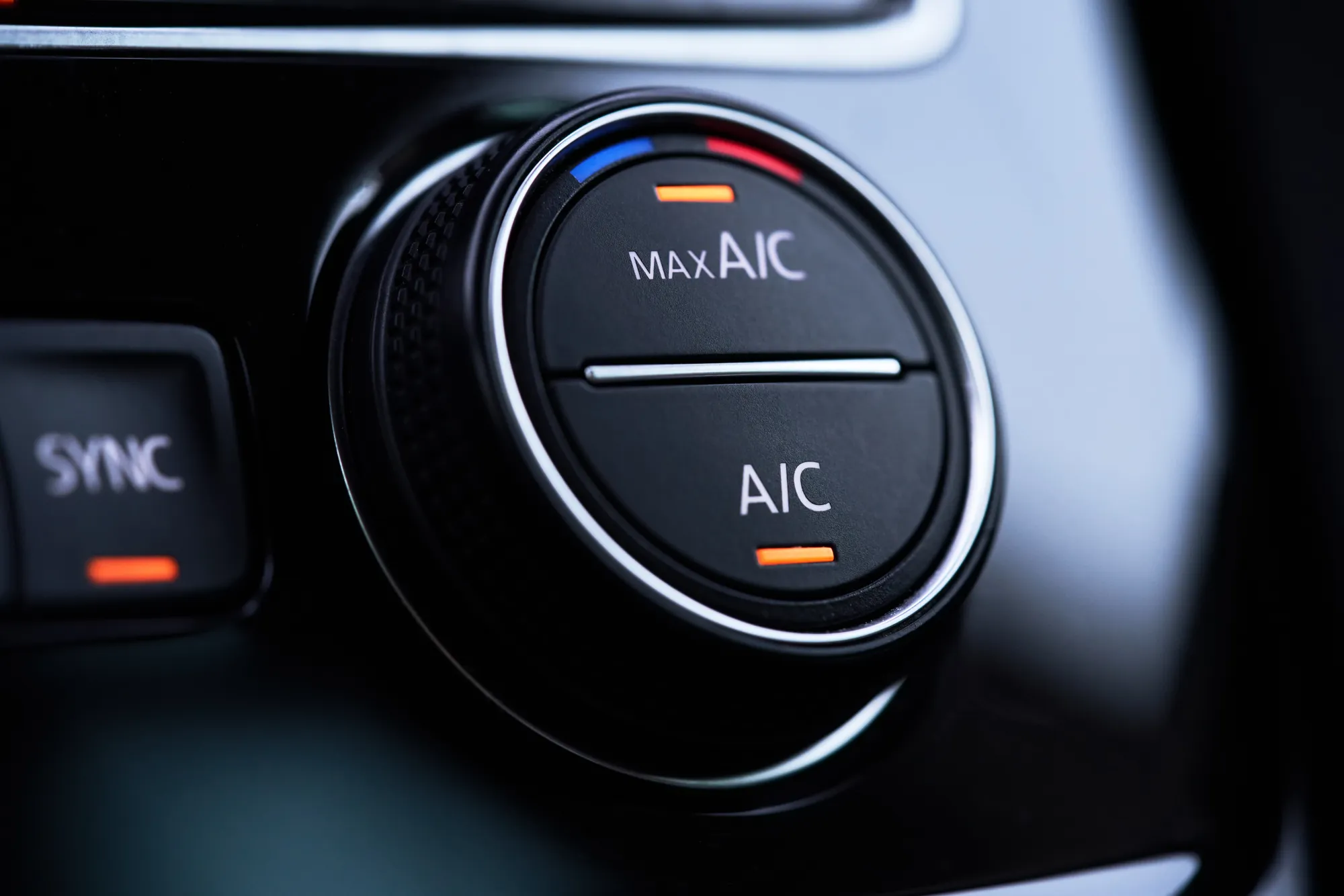
There is a specific moment every Gulf Coast driver knows. It is 96 degrees, the humidity is somewhere near swimming-pool levels, and the air coming out of the vents is warm. In Montgomery, Mobile, or Flowood, a car AC not blowing cold stops being an inconvenience within about four minutes. It becomes the reason you take the other vehicle.
Southern heat is also harder on an air conditioning system than most drivers realize. A system that limps along fine in a mild climate gets exposed fast when it has to pull interior temperatures down from 130 degrees on a parking lot in July. Below are the seven most common reasons the air turns warm, what a driver can reasonably check without tools, and where the line sits between a driveway fix and a job for a shop.
Why Southern Summers Are So Rough on Car AC
An air conditioning system does not create cold air. It moves heat out of the cabin and dumps it outside through the condenser, which sits up front behind the grille. The hotter the outside air, the less room there is to dump that heat, so the whole system works closer to its limit.
That matters in three ways:
- The system runs almost constantly. In Alabama and Mississippi, AC season stretches from March into October. Components get far more run hours than they would in a cooler climate.
- Small problems hide in mild weather. A system that is 20 percent low on refrigerant may still feel acceptable in April and feel useless in August.
- Heat plus humidity strains everything else. Idling in traffic with the AC maxed raises engine bay temperatures, which affects belts, hoses, and cooling system parts too.
That is why so many drivers report the same thing: the AC was fine, then suddenly it was not. Usually it was never fine. Summer just finished the job.
7 Reasons Your Car AC Is Blowing Warm
1. Low refrigerant from a slow leak
This is the single most common cause. Every AC system loses a small amount of refrigerant over the years through seals, O-rings, and hose connections. Once the charge drops below a certain point, the system either blows cool-but-not-cold air or shuts the compressor off entirely to protect itself.
Worth knowing: refrigerant is not consumed the way fuel or oil is. If a system is low, it leaked. An AC recharge that does not include finding the leak is a temporary fix, and in heavy summer use it may only hold for weeks.
2. A leaking or damaged condenser
The condenser sits at the very front of the vehicle, ahead of the radiator, where it takes the full impact of road debris, rocks, and bugs. A puncture becomes a refrigerant leak. Even without damage, a condenser packed with road grime and insects cannot shed heat properly, which shows up as air that is cold at highway speed and warm at a stoplight.
Anyone driving I-65, I-10, or Lakeland Drive regularly is putting a lot of debris through that condenser.
3. A failed compressor or compressor clutch
The compressor is the pump at the heart of the system. The clutch is what engages it when AC is switched on. When the clutch fails, the compressor never spins, and the system produces nothing but fan air.
Signs of a compressor problem include a loud click followed by no change in air temperature, a grinding or squealing noise when the AC is turned on, or the AC working intermittently. Compressors also fail from running low on refrigerant, since the refrigerant carries the oil that lubricates them. Ignoring a leak often turns a modest repair into an expensive one.
4. A clogged cabin air filter
This is the good news item on the list. If the air is cold at the vents but the volume is weak, the problem may simply be a cabin air filter choked with pollen, dust, and leaves. The Southeast produces an impressive amount of all three.
A restricted filter reduces airflow, which makes the system feel far weaker than it is, and it can eventually cause the evaporator to ice up. On many vehicles this filter sits behind the glove box and is a genuinely simple item to check.
5. A stuck blend door or blend door actuator
Behind the dash, a small door directs air across either the heater core or the evaporator, blending hot and cold to hit the temperature you selected. When the actuator that moves that door fails, the door can stick.
The telltale signs are hard to miss:
- Cold air on one side of the vehicle and warm air on the other
- A clicking or tapping sound from behind the dash when the vehicle starts or when the temperature is adjusted
- Temperature controls that do nothing at all
This one frustrates drivers because the refrigerant system may be perfectly healthy. The cold air is being made, it is just not reaching the cabin.
6. A cooling fan or electrical fault
The condenser needs airflow to work, and at low speeds that airflow comes from an electric fan. If the fan fails, AC performance collapses in stop-and-go traffic and returns once the vehicle is moving. That specific pattern, cold on the highway and warm in a drive-thru line, points strongly at airflow across the condenser.
Blown fuses, failed relays, bad pressure switches, and damaged wiring produce similar results. Modern systems will also refuse to engage the compressor if a sensor reports a fault, which is a protective measure rather than a breakdown.
7. A clogged expansion valve or orifice tube, or a frozen evaporator
Refrigerant has to change pressure at the right point in the loop. When the expansion valve or orifice tube clogs with debris or moisture, flow is restricted and cooling drops off. A frozen evaporator produces the same effect and often follows a period of restricted airflow or excess moisture in the system.
The classic symptom is AC that works well for 10 or 15 minutes, then gradually fades to warm, then recovers after the system is switched off for a while.
What a Driver Can Check, and What Needs a Shop
Not every AC complaint requires a lift and a set of gauges. A few things are reasonable to check first.
Reasonable to check yourself:
- Cabin air filter. Pull it and look at it. If it is grey and packed with debris, replace it and see whether airflow improves.
- Recirculation setting. On a 95 degree day, pulling in outside air instead of recirculating cabin air costs real cooling performance.
- Condenser face. Look through the grille. Leaves, plastic bags, and caked bugs restrict airflow and are sometimes removable.
- Listen for the compressor engaging. With the engine running and AC on max, a distinct click and a small change in engine note usually means the clutch engaged.
- Check both sides of the vehicle. Different temperatures from left and right vents point toward a blend door rather than refrigerant.
Better left to a shop:
- Anything involving refrigerant. Automotive refrigerant is under high pressure, causes frostbite on contact, and is regulated. Overcharging a system is a common consequence of parts-store recharge cans and can damage the compressor.
- Leak diagnosis. Finding a slow leak means dye, an electronic detector, or a vacuum test. Guessing is expensive.
- Compressor, condenser, and evaporator work. These require proper recovery of the existing refrigerant before anything is opened.
- Electrical and control faults. Pressure switches, relays, and blend door actuators need scan tool data to isolate.
There is one more reason to be cautious with those all-in-one recharge cans sold at the counter. Many contain sealant. Sealant can contaminate a shop’s recovery equipment, and several repair facilities will decline to service a system that has had it added. What looked like a cheap shortcut can complicate a proper auto AC repair later.
When Warm AC Is More Than a Comfort Problem
In a mild climate, a broken AC system is an annoyance. In Mobile in August, it is closer to a safety issue. Interior temperatures in a parked vehicle climb well past 130 degrees, and heat exhaustion sets in faster than most people expect, particularly for children, older passengers, and pets.
There is a defogging angle too. The AC system dehumidifies the air, which is what clears a windshield quickly during a Gulf Coast downpour. A vehicle with no working AC also defogs poorly, and that turns a summer thunderstorm into a visibility problem.
For anyone running work vehicles, the math is simpler still. A technician or delivery driver in a truck with no AC is a slower, more fatigued, and less safe technician or delivery driver.
How to Keep an AC System Healthy Through the Season
A few habits make a real difference across a long Southern summer:
- Run the AC briefly year round. Even in January, running it for 10 minutes once a month circulates oil and keeps seals from drying out. Dried seals are where leaks start.
- Replace the cabin air filter annually. In high-pollen areas, sooner.
- Rinse the condenser when washing the vehicle. A gentle spray through the grille clears bugs and debris.
- Address weak cooling early. Spring is the time to handle a system that felt marginal last August, not the third week of July.
- Do not ignore new noises. A squeal or grinding when the AC engages is an early warning, and early warnings are cheaper than late ones.
Drivers searching for car air conditioning repair near me in the middle of a heat wave usually find the same thing: everyone else is searching for it too. The shops are busy precisely when the need is greatest. Getting a marginal system looked at in April or May avoids the wait entirely.
Get Your AC Checked Before the Next Heat Wave
Gipson’s Tire Pros has been keeping Southeast drivers comfortable and safe since 1979, with certified technicians across Montgomery, Millbrook, Prattville, Mobile, Columbus, Flowood, and Greer. If your air is warm, weak, or just not what it used to be, schedule a service appointment at your nearest location and let a technician find the actual cause before summer does its worst.