
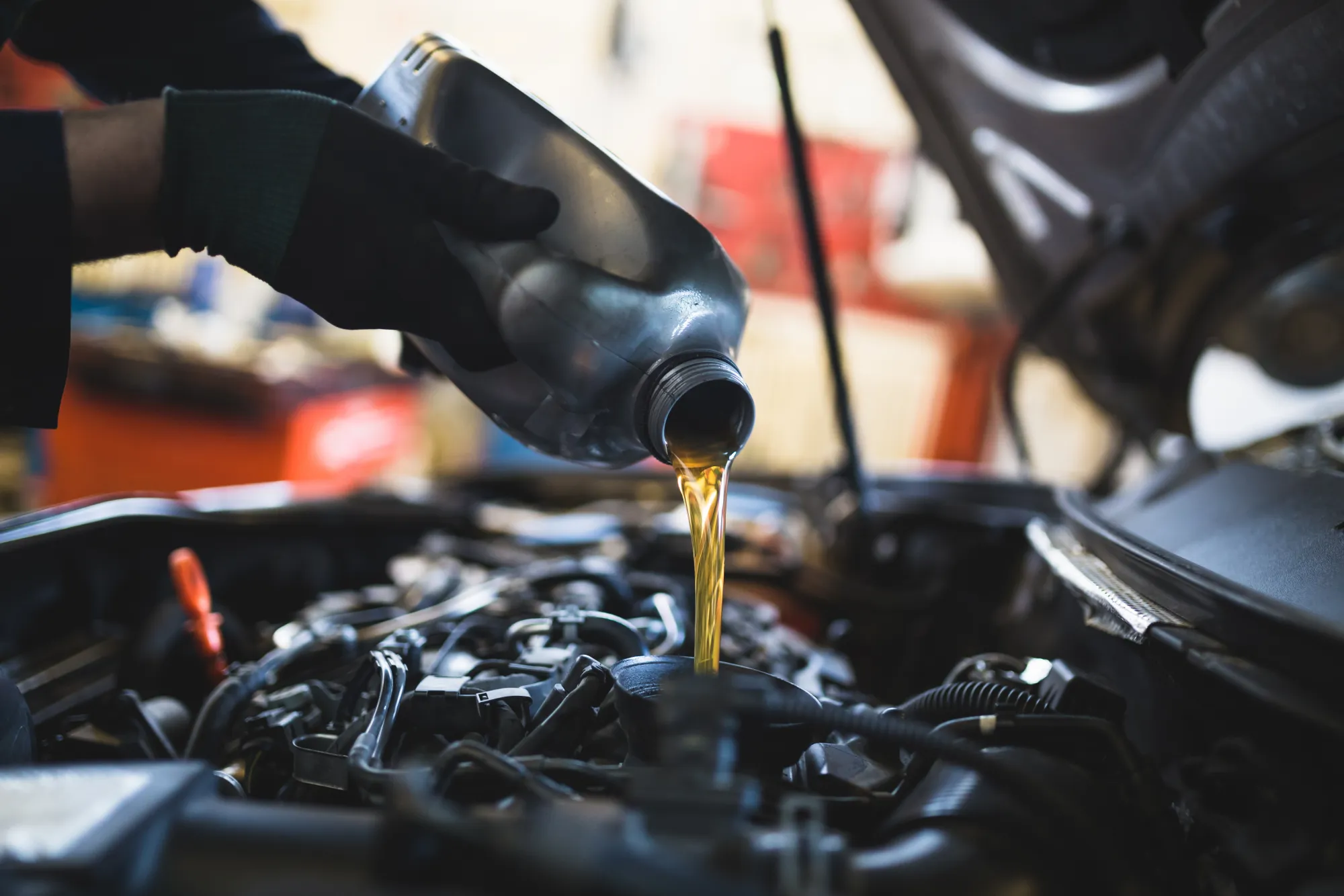
Ask five drivers how often to change oil and you’ll get five different answers. One swears by 3,000 miles. Another hasn’t thought about it since the dashboard light came on. The real answer sits somewhere in between, and along the Alabama and Gulf Coast corridor it lands closer to the shorter end than most owner’s manuals suggest.
Heat, humidity, and stop-and-go driving are hard on motor oil. A vehicle that would comfortably go 7,500 miles between services in a mild climate may need attention sooner in Montgomery, Prattville, or Mobile. Knowing why helps you protect an engine that costs far more to replace than it does to maintain.
The 3,000-Mile Rule Is Outdated, But Not By As Much As You Think
The 3,000-mile interval dates back to conventional oils and older engine designs. Modern engines are built to tighter tolerances, and modern oils hold up far better than what was on the shelf in 1979.
Most late-model vehicles carry a factory recommendation somewhere between 5,000 and 10,000 miles. Some European models stretch even further. That number, though, assumes what manufacturers call “normal service,” and normal service is a narrower category than the name suggests.
Here is the part most drivers miss. The manual almost always includes a second, shorter interval for severe operating conditions, and plenty of Alabama drivers qualify for it without ever realizing it.
What Counts As a “Severe Service” Oil Change Schedule
A severe service oil change schedule applies to far more than race cars and work trucks. Manufacturers define severe conditions in ways that describe ordinary daily driving across central Alabama and the Gulf Coast:
- Sustained high ambient temperatures. Summers in Montgomery and Mobile regularly push past 95 degrees, and underhood temperatures climb much higher.
- Frequent short trips. Runs under 10 miles keep oil from reaching full operating temperature, so moisture and fuel dilution never burn off.
- Stop-and-go traffic. Crawling along the Atlanta Highway or Chantilly Parkway at 5 p.m. adds engine hours without adding miles, and mileage-based intervals don’t account for that.
- Dusty or unpaved roads. Rural routes around the River Region put more contaminants into the air filter and the oil.
- Towing or hauling. Boats headed to Lake Martin, work trailers, and loaded beds raise oil temperatures significantly.
- Extended idling with the AC running. In an Alabama summer, that describes a lot of daily driving.
If two or more of those describe a typical week, the severe schedule applies. In practice, that means most Montgomery, Millbrook, Prattville, Mobile, Columbus, Flowood, and Greer commuters.
Why Alabama Heat Is Especially Hard on Oil
Motor oil does more than lubricate. It carries heat away from the pistons and bearings, suspends soot and metal particles, and coats internal parts with a protective film. Heat attacks every one of those jobs.
- Oxidation speeds up. As a rough rule, oil breaks down about twice as fast for every 18-degree rise in operating temperature. A July commute is not the same chemical environment as a January one.
- Viscosity drops. Hot oil thins out. Thinner oil means a thinner protective film between moving metal parts.
- Additives deplete faster. Detergents, dispersants, and anti-wear additives get used up, and heat burns through them quicker.
- Moisture lingers on short trips. Gulf Coast humidity plus an engine that never fully warms up leaves water in the crankcase, which promotes sludge.
Combine 100-degree afternoons with a five-mile commute and the oil in the pan ages faster than the odometer suggests.
There is a second heat source most drivers never think about. Sitting still in traffic cuts the airflow through the radiator and across the oil pan, so the cooling system works harder while the engine keeps making heat. A vehicle idling in a school pickup line on a 98-degree afternoon is running hotter than the same vehicle cruising at 65 with air moving through the grille.
How Often to Change Oil: A Practical Interval for Alabama Drivers
There is no single number that fits every vehicle, but these ranges hold up well for local driving conditions:
- Conventional oil, severe conditions: 3,000 to 4,000 miles.
- Conventional oil, mostly highway: 4,000 to 5,000 miles.
- Synthetic blend, severe conditions: 4,000 to 5,000 miles.
- Full synthetic, severe conditions: 5,000 to 7,500 miles.
- Full synthetic, mostly highway: 7,500 to 10,000 miles, following the manufacturer’s figure.
One more rule applies regardless of mileage. Change the oil at least twice a year. A vehicle that only covers 3,000 miles annually still has oil that has been absorbing moisture and losing additive strength the whole time. Time degrades oil even when the wheels aren’t turning.
Vehicles with an oil life monitoring system are usually reliable, since those systems track engine temperature, load, and trip length rather than mileage alone. Treat the reading as guidance rather than gospel, and still check the dipstick monthly.
Don’t Guess at the Viscosity Grade
The number on the bottle matters as much as the type of oil in it. A grade like 5W-30 describes how the oil flows when cold (the number before the W) and how thick it stays once the engine is hot (the number after).
Modern engines are engineered around a specific grade, and many of them run thin oils such as 0W-20 to reduce internal drag. Those tight oil passages and variable valve timing systems are designed for a particular thickness. Pouring in a heavier oil because it “sounds better for summer” can slow oil delivery to the top of the engine on startup, which is exactly when most wear happens.
The grade the manufacturer specifies already accounts for hot weather. What Alabama heat changes is how quickly that oil wears out, not which grade belongs in the engine. Check the owner’s manual or the cap on the valve cover, and let a technician confirm it if there is any doubt.
7 Signs the Oil Is Overdue
Waiting for a warning light is waiting too long. Watch for these instead:
- Dark, gritty oil on the dipstick. Fresh oil is amber and translucent. Oil that looks like coffee and feels sandy between two fingers has done its work.
- The level is low. Oil that burns off or seeps out is also oil that is working harder in a smaller volume.
- Engine noise has increased. Ticking, tapping, or a louder idle can mean the protective film has thinned.
- The oil life monitor has dropped below 15 percent. That’s a reminder to schedule, not an emergency.
- A burnt smell inside the cabin. Often that is oil contacting hot exhaust components.
- Exhaust smoke that hangs around. Blue-tinted smoke suggests oil is reaching the combustion chamber.
- You genuinely can’t remember the last service. The sticker on the windshield exists for a reason, and if it’s missing, assume the vehicle is due.
Any of these are worth a look. Several together mean the vehicle should be seen soon rather than at the next convenient moment.
Skipping past those signs gets expensive in a predictable order. Oil thickens into sludge, the pickup screen starts to clog, oil pressure falls, and the parts that depend on a pressurized film (bearings, camshafts, timing chain tensioners) begin to wear. On engines with variable valve timing, sludge often shows up first as a rough idle or a check engine light, long before anything seizes. None of that is sudden, which is what makes it easy to ignore.
Conventional, Synthetic Blend, or Full Synthetic?
The oil aisle can feel like a shell game. The practical differences come down to how the oil is built and how it behaves under heat.
Conventional oil is refined crude with additives mixed in. The molecules vary in size and shape, which means the oil breaks down sooner under high temperatures. It is the least expensive option per service and suits older, low-mileage vehicles with simple engines and shorter intervals.
Synthetic blend mixes conventional and synthetic base oils. It handles heat noticeably better than conventional at a modest price increase. For a truck or SUV that sees occasional towing and a lot of summer traffic, a blend is a reasonable middle ground.
Full synthetic oil is engineered with uniform molecules and a stronger additive package. A full synthetic oil change costs more up front, but it buys longer intervals, better cold starts, better protection at sustained high temperatures, and cleaner internals over the life of the engine. Turbocharged and direct-injection engines run hotter by design and usually require it, and many manufacturers limit warranty coverage if a lesser oil is used.
High-mileage formulations are worth knowing about too. Available in blend and full synthetic, they add seal conditioners that help older engines past 75,000 miles slow minor leaks and oil consumption.
For most vehicles facing Alabama heat, a full synthetic oil change is the option that pays for itself. Fewer visits and better protection during the hottest months generally offset the higher price per service.
Work Trucks and Fleet Vehicles Need Their Own Math
Vehicles that earn a living rarely fit the mileage on the sticker. A contractor’s truck idling at a job site, a delivery van making 40 stops a day, or a service vehicle running the AC while parked all accumulate engine hours that the odometer never records.
For those vehicles, the safest approach is to shorten the interval by roughly a quarter against the severe service figure, or to track engine hours where the vehicle reports them. Logging every service by date and mileage also makes the pattern obvious over a year, which beats guessing when a truck is due.
Don’t Forget the Filter and the Rest of the Check
An oil change is only as good as the filter that goes with it. A clogged filter can bypass entirely, sending unfiltered oil straight through the engine. The filter should be replaced at every service, not every other one.
An oil service is also the natural moment to look at the rest of the vehicle. Fluid levels, belts, hoses, the air filter, and tire condition all get checked while the vehicle is on the lift. Heat is hard on more than oil, and replacing a swollen coolant hose early is far cheaper than repairing overheating damage later. It is also the easiest appointment to pair with a tire rotation, since the wheels are already coming off on many vehicles.
Summer heat is hard on rubber too, so use the same visit to look for the signs of aging tires while the vehicle is up in the air.
The Short Answer for Drivers Searching “Oil Change Near Me”
For most drivers in Montgomery and the surrounding communities, the honest interval is 3,000 to 5,000 miles on conventional oil and 5,000 to 7,500 miles on full synthetic, with a twice-yearly minimum regardless of mileage. The heat, the traffic, and the short trips are what push that number below the figure printed in the manual.
If it has been a while, a technician can check the oil’s condition, confirm the right viscosity for your engine, and set an interval that matches how you actually drive rather than a number on a sticker.
Due for an oil change in Montgomery AL, or closer to a store in Millbrook, Prattville, Mobile, Columbus, Flowood, or Greer? Schedule your service appointment today and get your vehicle on the right oil before the next stretch of heat.